


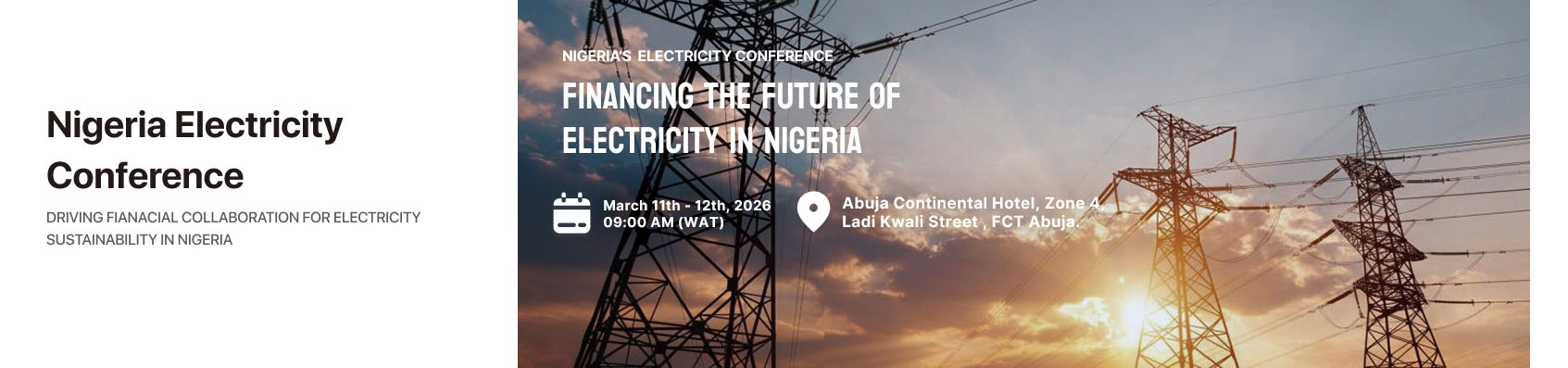



Electricity is Nigeria’s most expensive public failure, draining trillions from the economy each year while dimming productivity, trust, and growth. Against the backdrop of the government’s promise to deliver adequate power in 2026, the critical issue is no longer the promise of stable power but the unanswered question of how it will be offered, writes Festus Akanbi
electricity is the most basic infrastructure of modern life. It is scarcely noticed when it works and impossible to ignore when it fails. In Nigeria, failure has become so routine that darkness itself has been normalised. This normalisation now collides with repeated political assurances that a stable power supply is imminent. The gap between promise and performance is no longer rhetorical; it is visible in lost output, fiscal leakages, and daily hardship.
A night flight into Lagos offers a stark summary. Instead of the continuous glow typical of coastal megacities, the city appears as a scatter of dim orange lights, each powered by a private generator. What appears to be illumination is actually fragmentation. Every generator is a substitute for failed public infrastructure, and together they form one of the most expensive electricity systems in the world.
Financial Cost
The financial burden is staggering. In 2023 alone, Nigerians spent an estimated N16 trillion on petrol and diesel for self-generation. This covers only fuel and excludes generator purchases, maintenance, inverters, and opportunity costs. The World Bank estimates that unreliable electricity costs Nigeria about $29 billion annually, roughly 2 per cent of GDP. These losses exceed federal spending on health and education combined. Electricity, which should quietly enable growth, instead constrains it.
Behind the aggregates lies widespread microeconomic damage. Factories halt production mid-shift when power fails, raising unit costs and disrupting supply chains. Hospitals rely on diesel to keep equipment running. Cold storage failures compromise food and pharmaceuticals. Students study under torchlight. Small businesses divert capital from growth to fuel. These daily disruptions accumulate into structural economic underperformance.
The Paradox of Plenty
Nigeria’s crisis is not rooted in a lack of energy resources. Installed generation capacity stands at about 13,000 megawatts. Yet peak delivery to the grid in 2025 rarely exceeded 5,500 megawatts, with average daily supply closer to 4,000 megawatts, roughly what a single large global city consumes off-peak. The gap reflects overlapping failures: inadequate gas supply, weak transmission, poor plant availability, and chronic grid instability.
The grid itself remains fragile. Repeated system collapses in 2024 and 2025 triggered nationwide blackouts. These events erode investor confidence and push consumers toward self-generation. As more users exit the grid in practice, revenues decline, leaving the system short of funds for maintenance and expansion. A vicious cycle takes hold.
Losses within the value chain deepen the problem. A significant share of generated power never becomes revenue. Transmission losses are substantial, but distribution losses—technical and commercial—are worse. Fewer than 55 per cent of customers are metered, leaving most on estimated billing. In such conditions, payment discipline weakens. For every N10 worth of electricity delivered, only a fraction is fully recovered; the rest is lost to losses, theft, disputes, and political interference.